Establish the document hierarchy
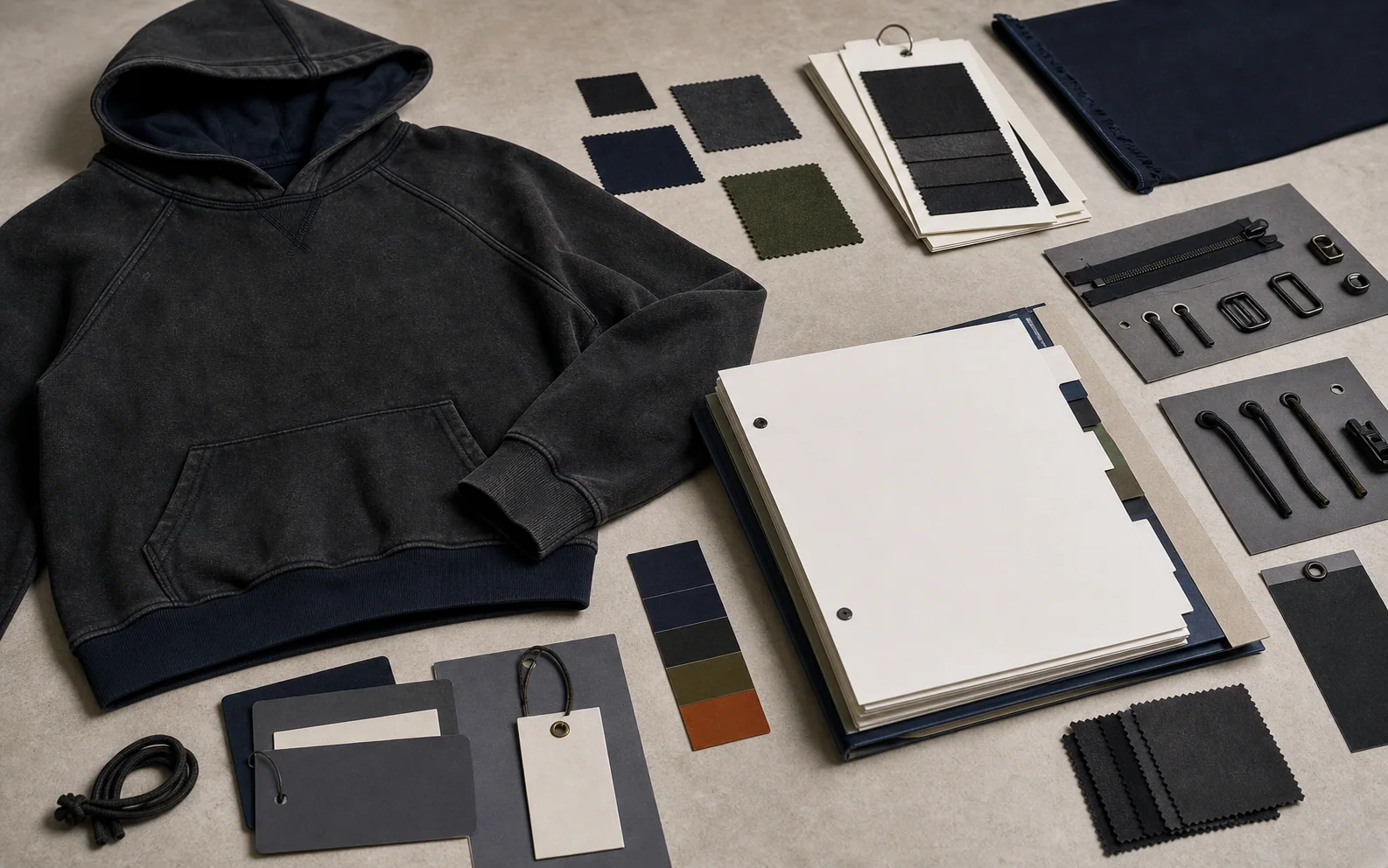
Name the governing tech pack, BOM, measurement chart, artwork, color, test, packaging, purchase-order, and sample versions and resolve conflicts before sampling.
Now Accepting Orders for SS2026 — Sample turnaround in 7-10 days. Worldwide shipping available. Request a Sample Kit →
Streetwear buyer program · Controlled production records
Bring the tech pack, BOM, measurement chart, tolerances, approved references, artwork, color standards, tests, packaging, quantities, target market, target window, and change history needed for a useful feasibility review.
Answer before specification
Record open points, substitutions, sample comments, measurement revisions, material and trim approvals, test requirements, packaging updates, and the final approved state. Confidentiality scope, document access, example permissions, and capacity wording are confirmed during review.
02 / Development decisions
Each decision becomes part of the sample brief, approval record, or evidence request. Unknowns remain explicit instead of becoming silent assumptions.
Name the governing tech pack, BOM, measurement chart, artwork, color, test, packaging, purchase-order, and sample versions and resolve conflicts before sampling.
Check materials, construction, machinery, trims, wash, decoration, measurements, grade, tolerances, tests, packing, quantity, target market, and target window.
Log every alternative, substitution, comment, revision, approval, approver, date, affected record, sample state, and whether the change reaches bulk.
Recheck current material and trim availability, color or wash boundaries, retained references, specification changes, test needs, inspection history, capacity, and delivery context.
03 / Decision matrix
Feasibility, confidentiality, capacity, timing, pricing, evidence, and production allocation are confirmed for the current brief and are not implied by a prior order.
| Option or system | Best used to define | Controls to record |
|---|---|---|
| New style from complete tech pack | Controlled first development | Document conflicts, BOM, measurements, tolerances, construction, artwork, tests, packaging, and approvals |
| Supplier transition or second source | Rebuild an approved product responsibly | Ownership and permission, retained sample, material equivalents, process differences, tolerances, evidence, and comparison plan |
| Repeat order | Reproduce a previously approved state | Current records, changed inputs, availability, shade or wash boundary, retained references, inspection history, and release |
| Range scale-up | Add styles, colors, sizes, or volume | Shared BOM, capacity review, critical path, size and color allocation, test burden, QC plan, and phased approvals |
04 / Product anatomy
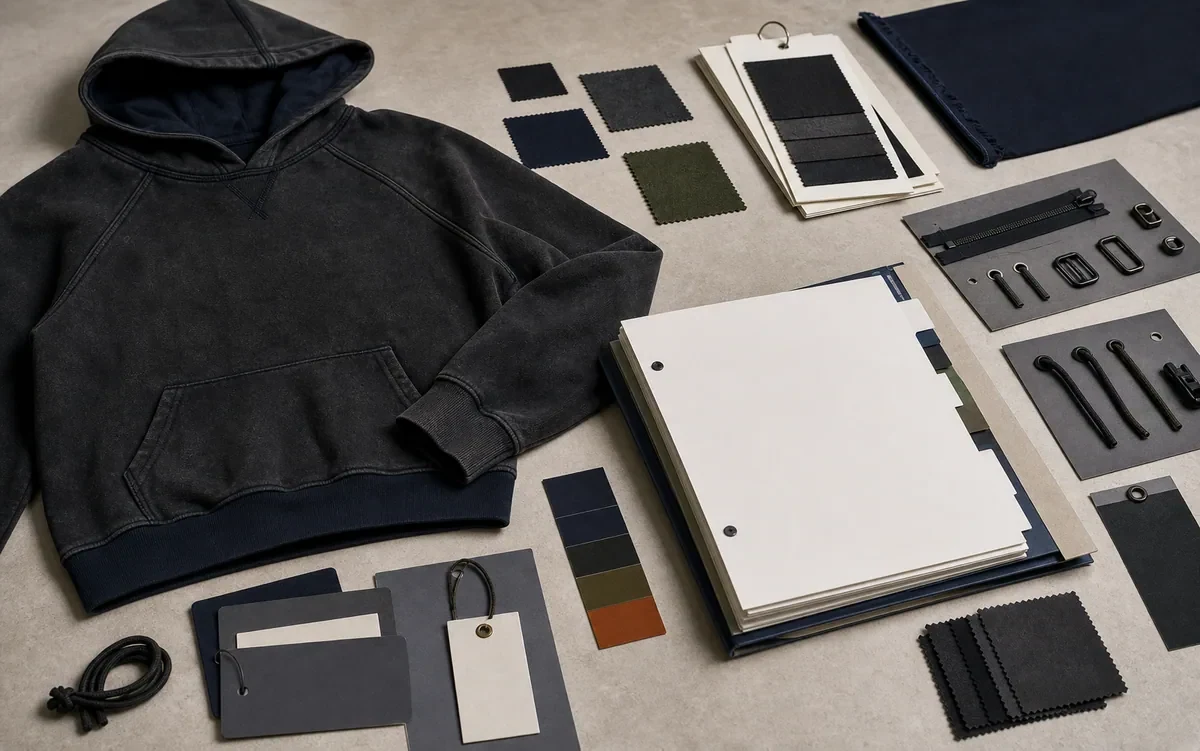
The approved sample, technical records, artwork, color or wash standard, trims, labels, packaging, and purchase order should agree. Any exception needs an owner, dated disposition, and clear effect on production.
05 / Failure modes
06 / Sample gates
Confidentiality, intake, and document-control review
Feasibility, tolerance, evidence, and critical-path alignment
Sample, revision, size-set, test, and packing approval
Released bulk record, inspection plan, and repeat-order baseline
07 / Evidence boundary
Current SSM claims are supported by evidence available upon request. Any record should identify its source, date, method, specimen, result, applicability, and limitation. Generated imagery on this page is explanatory and is not presented as factory, client, material, or test proof.
08 / Connected authority
These links are live canonical routes. They carry the buyer from product scope into the material, surface, quality, or development decision that comes next.
09 / Buyer questions
Send the current tech pack, BOM, measurements and tolerances, approved references, artwork, colors, tests, packaging, quantities, target market and window, change history, and the questions that need feasibility review.
Confirm ownership and permission, document the approved product state, compare materials and components, identify process differences, agree tolerances and evidence, develop samples, and approve changes before bulk.
No. Repeatability depends on current materials, trims, color or wash boundaries, specifications, retained references, inspection history, capacity, and review of any changed input.
Confidentiality, access, retention, sharing, example permissions, and any formal agreement requirements are confirmed during intake before restricted records are used.